
Death Valley hold many records, mysteries, and legends. It is known
for being both the hottest and lowest point in the United States.
Strange happenings are reported there almost daily, these happenings
include rocks that move by themselves and dunes that make musical
sounds. And the stories are even stranger, stories of races of giants
that lived there many thousands of years ago and buried treasure that
is the lost fortune of miners. Death Valley is also known for being
the legendary hideout of now convicted serial killer Charles Manson.
Even if legends and history don't interest you Death Valley is
extremely beautiful and makes for a perfect vacation destination.
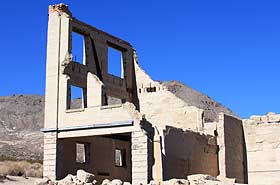
Rhyolite - Little More Than a Memory
This once ahead of its time town now is nothing more then a configuration of buildings. But that’s not to say it isn't famous or that it’s boring. Rhyolite has become one of the most visited ghost towns in the world and the most photographed town in the West. There are structures where miners lived in almost a hundred years ago made entirely of glass bottles. And, on the main road sit sculptures of the last supper. This town attracts people from all over the world and is most definitely worth a visit.
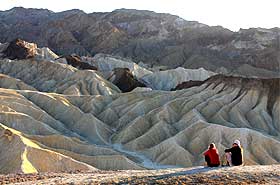
Zabriskie Point
It is an elevated overlook of a colorful, undulating landscape of gullies and mud hills at the edge of the Funeral Mountains, a few miles from the edge of Death Valley - from the viewpoint, the flat salt plains on the valley floor are visible in the distance. In the past it was possible to drive right to the edge of the overlook, and several minutes of the film was set there, but since then a new larger car-park has been constructed lower down and visitors now have a short walk uphill.
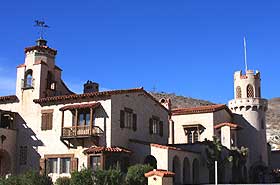
Scotty's Castle
Nestled deep in an oasis-like canyon in Northern Death Valley National Park lies Death Valley Ranch, or as it is better known Scotty's Castle. A historical home showcasing technological innovation and unequaled craftsmanship in a remote desert location. A place full of the mystery surrounding an incomparable friendship that resulted in the creation of a $2 million dollar vacation home. Today the site is owned and operated by the National Park Service
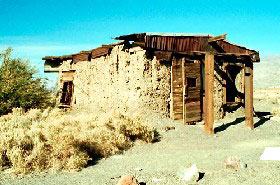
Ballarat - Death Valley Ghost Town
Ballarat was named after an Australian gold camp by one of its first residents, an Australian immigrant named George Riggins It was in the original Australian town of Ballarat that the first gold was discovered in that country in 1851.
Today, this lonely ghost town still sports a couple of full-time residents and the little store is open most afternoons and weekends.
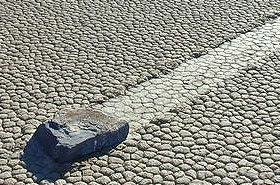
Racetrack Playa
Racetrack Playa is an almost perfectly flat dry lake bed nestled between the Cottonwood Mountains to the east and the Last Chance Range to the west. During periods of heavy rain, water washes down from nearby mountain slopes onto the playa, forming a shallow, short-lived lake. Under the hot Death Valley sun, the thin veneer of water quickly evaporates, leaving behind a layer of soft mud.
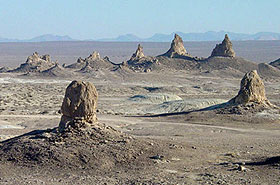
Trona Pinnacles
The Trona Pinnacles is one of the most unusual geological features in the California Desert Conservation Area. The unusual landscape consists of more than 500 tufa spires (porous rock formed as a deposit from springs of streams), some as high as 140 feet (43 m), rising from the bed of the Searles Lake (dry) basin.
The Trona Pinnacles are located about 35 miles west of the Wildrose entrance to Death Valley on Route 178.
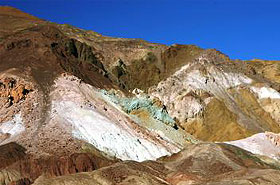
Artist Palette
The rocks within this section of the park have been stained a myriad of colors by minerals within, creating a view that resembles an artist's palette. Sediments of iron salts, mica, and manganese, shimmer on the rugged hillside, with blues, greys, pinks, reds and yellows. The colors are most spectacular in the late afternoon when the sun is low and its light is warm.
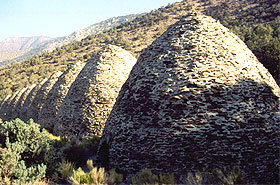
Charcoal Kilns
The Charcoal Kilns were built in 1867 and were used to reduce pinyon pine and juniper trees to charcoal in a process of slow burning in low oxygen. This fuel was then transported to mines in Death Valley to feed smelting and ore extraction operations.
The kilns were abandoned three years after they were built but were restored in 1971 by Navajo Indians from Arizona.